
Flexible metal corner tape for curved and off-angle corners
Joint paper bonded to two corrosion-resistant metal strips, with a polymer nose coating that resists scuffing under the knife. It bends around arches, bay windows and vaulted ceilings, and replaces metal corner bead on any angle that is not 90°.
Flexible metal corner tape is a drywall corner trim made of paper joint tape bonded to two corrosion-resistant metal strips, with a polymer reinforcement running down the nose. Because the metal is in two narrow strips rather than one folded profile, the tape bends to any radius and any angle, so it finishes curved walls, archways and off-angle corners where a rigid bead cannot follow. XJ5030 is applied with joint compound only — no nails, screws or adhesive — in 7.6 m and 30 m rolls, packed 10 or 20 to a cardboard dispenser.
Also searched as corner tape · flexible corner bead · flexible corner beads · flexible drywall corner · drywall corner tape · no-coat drywall corners · strait-flex · joint reinforcement tape
Brand names are listed only to describe the product type buyers ask for; XIUJUN is not affiliated with them.
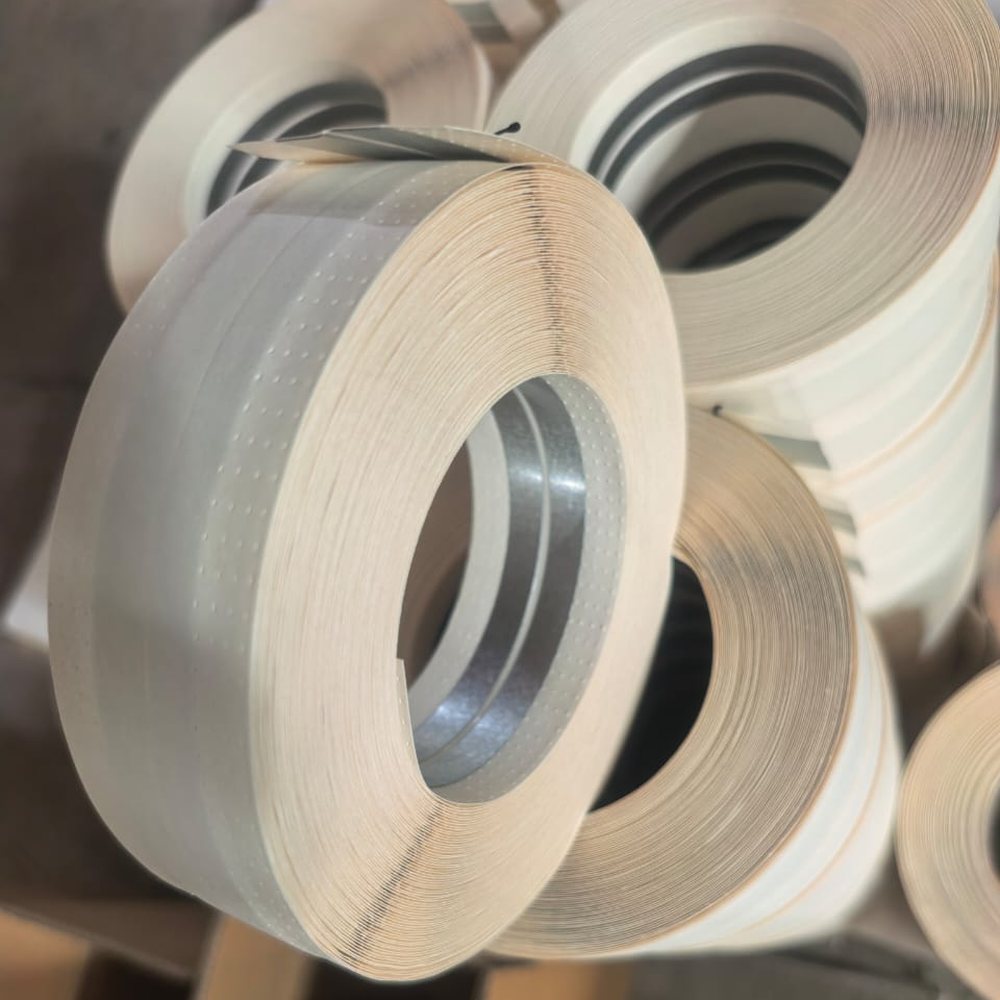
Where a rigid bead cannot go
A metal corner bead is straight, and a corner that curves is not. On an archway, a barrel-vault ceiling, a bay window return or a splayed opening, the usual answer is to cut the bead every few centimetres and fight the kinks. Flexible corner tape takes the radius as it comes: score one of the two strips, fold on the centre, and the tighter the cuts, the tighter the curve.
It also solves the angle nobody stocks a bead for. Professionals use it on all off-angles — 45°, 135°, whatever the framing produced — because the two steel strips bend independently around the corner instead of resisting it.
Four cores, one profile
- Galvanised steel — the standard core: cheapest, stiffest, and enough corrosion resistance for interior work.
- Al-Zn steel — zinc-aluminium coating for humid rooms and coastal jobs.
- Aluminium — no rust at all, and the softest of the four to fold by hand.
- PVC strip — no metal edge anywhere in the profile, for buyers who specify non-metallic accessories.
All four carry the same paper facing, so the compound keys the same way and the finished corner paints the same way. The choice is about the environment, not the method.
How to apply it
- Score one of the two strips with a knife and bend, spacing the cuts closer together for a tighter radius.
- Spread joint compound to a depth of 1/8" over both sides of the corner at once.
- Fold the tape on the centre margin with the metal facing the wall, and press it firmly into the compound.
- Wipe the excess with the taping knife. After the bed coat dries, sand lightly and apply the finish coat, feathering 2" beyond the edge of the first.
- Where the corner needs it, add a second coat 6"–10" wide on each side.
Work only within the temperature range recommended for the joint compound, store the rolls in closed cartons at room temperature in a dry shelter, and keep acid-cure adhesives away from the metal face.
What it replaces
One roll replaces metal corner bead, paper-faced metal trim and the various no-coat style corner systems on curved and off-angle work, and it cuts to length so there is no waste on short returns. On straight 90° corners a rigid paper-faced bead is still faster; on everything else this is the roll that saves the labour.
At a glance
| Model | XJ5030 |
|---|---|
| Construction | Paper joint tape + two metal strips + polymer nose coating |
| Core options | Galvanised steel, Al-Zn steel, aluminium or PVC strip |
| Width | 50 mm nominal, paper wings perforated |
| Roll lengths | 7.6 m (25 ft) and 30 m (100 ft); other lengths on request |
| Packing | Cardboard dispenser, 10 or 20 rolls per pack |
| Corners | Inside and outside; 90° and any off-angle |
| Fixing | Joint compound only — no fasteners, no acid adhesive |
| Application | Manual only: arches, curves, bay windows, vaulted and coffered ceilings |
| Private label | Roll print and dispenser print |
Specification questions
Can it be used on a 90° corner?
Yes, on inside and outside 90° corners it works, but a rigid paper-faced bead is quicker there. The tape earns its place on curves, arches and off-angles, where a bead cannot follow the geometry.
Do you need nails or screws?
No. The tape is bedded in joint compound and held by the compound alone. Fasteners would punch through the paper facing and defeat the point of the profile.
What radius can it take?
The radius is set by how closely you score and fold the strip — the more cuts per 100 mm, the tighter the curve. For a very tight radius, score both edges and work in short lengths rather than trying to force a long piece around.
Which core should I order?
Galvanised steel for general interior work, Al-Zn for humid or coastal jobs, aluminium where nothing may rust, PVC where the specification excludes metal. All four run on the same paper facing.
How is it packed for export?
In a cardboard dispenser, 10 or 20 rolls to the pack, printed to your artwork or left neutral. The dispenser doubles as the shelf unit, so the roll does not unspool in the van.
What a quotation needs from you
That is all a quotation needs. We reply within four working hours, China time, with packing, loading plan and lead time — not a price list.
- Manufacturer since 2005
- 36 categories, one container
- Private label or neutral packing
- ISO 9001 & ISO 45001 certified


Enquiry received
We reply within four working hours, China time. For anything urgent, WhatsApp +86 139 6270 9169.
Opens WhatsApp with the message already written.